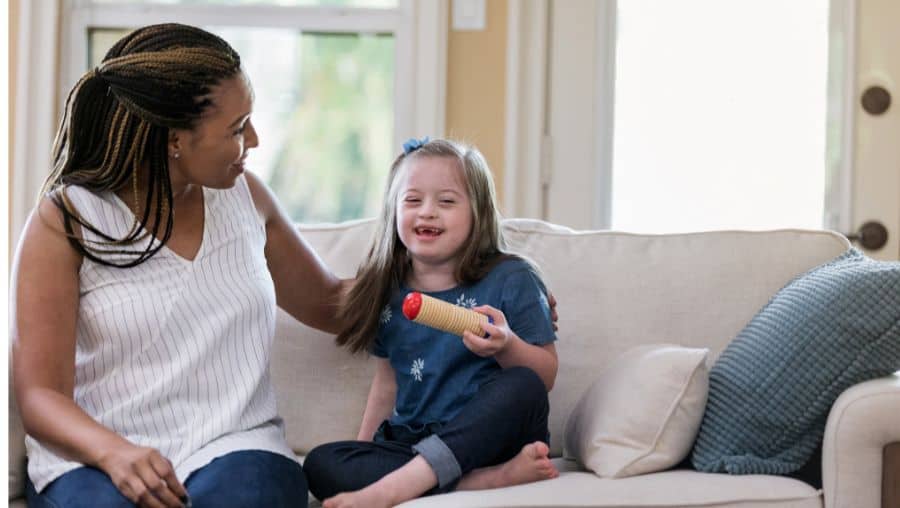
Safeguarding kids is not a single plan or one-off instruction. It is a self-displined practice that stays in day-to-day choices, silent monitorings, great record-keeping, and well-timed conversations. When something feels off, a qualified adult picks up the threads, notices patterns, and takes proportional action. That is what robust child protection awareness training intends to attain: develop the skills and self-confidence to identify early warning signs and act in line with the legislation and regional procedures.
I have actually worked with colleges, very early youth services, youth programs, and sporting activity clubs that all thought they were doing enough, just to understand their personnel required more clear guidance on limits, reporting paths, and documents. A strong child protection program does not drown people theoretically. It drills the useful: what to try to find, what to state, when to tape, that to call, and how to keep the child at the centre.
What reliable training covers
Child security training ought to satisfy two tests. Initially, it needs to be straightened with child protection training certificate programs regulation and jurisdictional support, including Division of Education child protection training needs any place suitable. Second, it must make good sense to an instructor working at 3 pm, an educator overseeing lunch, a trainer on a weekend away video game, or a volunteer running a vacation program. The best programs attach policy to the messiness of the real world, where disclosures are partial, signs are uncertain, and adults are busy.
Core web content normally includes guarding principles, kinds of misuse and forget, signs by age and developmental stage, brushing practices, cultural and family members context, disclosure characteristics, legal and moral obligations, mandatory reporting paths, documentation requirements, details sharing, risk-free physical and on-line environments, and reflective method to lower personal prejudice. When succeeded, these topics move beyond meanings to demonstrate how they play out in everyday contact with kids and young people.
For early childhood, colleges, and out-of-school care solutions in Australia, you will certainly commonly come across the system of competency CHCPRT025 Identify and record kids and youngsters in jeopardy. This unit underpins numerous child protection programs and is readily available as a CHCPRT025 online training course or combined alternative. Whether supplied through a signed up training organisation or embedded in department expert discovering, the goal stays the exact same: develop trusted habits to make sure that issues are grabbed early and referred appropriately.
Recognising patterns rather than pinning everything on a single sign
One bruise seldom tells a whole story. A solitary late arrival does not equivalent neglect. Training reinforces that you try to find cumulative patterns and context. For example, you may observe a seven-year-old that utilized to be friendly becoming withdrawn over a number of weeks, paired with constant hunger and hoarding food. Or a teen that unexpectedly stops taking part in sport, comes to be hypervigilant about phone alerts, and has brand-new, unusual presents. A single sign invites inquisitiveness, while several indications throughout time demand action.
I as soon as trained a volunteer that flagged a child's recurring tummy pains every Monday. By themselves, tummy aches are common. However, integrated with sleepiness, unwashed clothes, and stressful body language when a particular adult gotten here, the picture was different. The volunteer logged observations, examined inner treatments, and raised the concern. The resulting assistance plan boosted the child's safety without leaping to complaints. That outcome took place because the problem was dealt with as a pattern, not a one-off event.
Signs to watch for across age groups
Physical, emotional, sexual assault, and overlook can offer in a different way throughout ages and social contexts. Good child protection awareness training equips you to think about development, handicap, language needs, and neighborhood standards while keeping security paramount.
In very early youth, disregard usually shows as chronic hygiene concerns, unattended clinical conditions, extreme cravings, or developmental delays not regular with recognized medical aspects. Emotional damage might appear like consistent inconsolability or indifference to convenience. In main years, you might see extreme compliance or aggression, persistent injuries with irregular descriptions, or a youngster that ices up when touched. Teenagers commonly reveal relational markers: unexpected seclusion from helpful peers, managing relationships with older people, unusual cash or devices, online secrecy, and risk-taking that intensifies quickly.
None of these verify injury by themselves. They are prompts to maintain notes, check the service's limit advice, and, if needed, consult the marked securing lead or child protection coordinator.
The discipline of documentation
Memory is faulty and impacts discolor. You secure kids, and on your own, by writing clear, prompt notes. Good records are accurate, specific, and without judgment. Tape what you saw or heard, not what you presume. Consist of dates, times, exact words where feasible, and any kind of activities you took.
I have actually examined case reports that said, "Youngster looked maltreated," which is practically unusable. Compare that with, "At 10:15 on 3 May, Sara showed up late. I observed a purple swelling about 3 cm on the left lower arm. When asked exactly how it occurred, Sara claimed, 'I don't understand, maybe I dropped.' No autumn was reported by classroom personnel." The second instance provides a supervisor adequate product to assess danger and decide on following steps. It additionally holds up if a situation employee or court later on assesses the file.
Handling disclosures with care
Children hardly ever divulge in neat, linear sentences. Disclosures can sound like a half-finished idea, an informal comment, or a behavioral outburst. In technique, the minute is short, so your action needs to be constant and simple.
If a youngster starts to divulge, follow your training and your service's plan. Focus on safety and security and clarity, not examination. Allow the kid set the speed. You could state, "Thank you for telling me. You did the right point," and "I need to share this with people who can aid keep you secure." Stay clear of leading questions or assurances of secrecy you can not maintain. Then make a prompt, accurate document using the kid's very own words and alert the appropriate leader.
Good training offers expressions you can count on under stress. Staff who have actually practiced those lines are much less most likely to over-promise or unintentionally guide the child's account.
Mandatory child protection training and governing context
In lots of territories, individuals that collaborate with youngsters should complete obligatory child protection training at established intervals. Schools typically access Department of Education child protection training that aligns with statewide reporting assumptions. Early childhood years setups generally require a child protection certification or recorded professional understanding linked to standards. Youth and social work operate under similar regimes.
The specifics vary by state or territory, so a nationwide overview is constantly a simplification. Some jurisdictions call for yearly refresher courses. Others define preliminary completion with a much shorter update cycle. If you are in Australia and your function converges with child protection duties, consult your organisation's plan and the appropriate youngster safety and security authority for existing requirements. For groups preparing their calendar, it is sensible to publication child protection training 2025 days now, particularly for solutions that close over vacation periods or have seasonal staff turnover.

The CHCPRT025 system and what it in fact teaches
The CHCPRT025 Identify and report kids and youngsters at risk system sits inside the broader CHC training bundle for social work and education and learning support roles. A CHCPRT025 training course generally covers threat indicators, legal responsibilities, reacting to disclosures, organisational procedures, interagency cooperation, and record-keeping. Competency calls for demo, not just participation, which is why analyses frequently entail circumstances, written jobs, or work environment observations.
People commonly ask if a CHCPRT025 certificate is enough to satisfy company needs. It depends. Lots of companies approve CHCPRT025 child protection training as a standard, but they still expect induction on regional plans, info systems, cultural security, and the specific referral pathways in your location. Think of the CHCPRT025 training as a transferable core. Your office induction includes the local map.
The adaptability of a CHCPRT025 online program aids services timetable training for informal or remote staff. On-line distribution functions when it includes solid circumstances, interactive checkpoints, and a clear process for questions. That said, face-to-face workshops pay for richer conversation of delicate case studies and support for personnel who may be personally affected. Some solutions take a mixed approach: CHCPRT025 online for basics, then a short on-site session to practice reporting steps with the neighborhood forms and contacts.
What a strong child protection program seems like in practice
In sessions that land well, participants chat via real problems. As an example, an educator questions if the duplicated, inexplicable late pick-ups are an overlook threat or a sign of real estate instability. An out-of-school care coordinator faces a moms and dad who shows up intoxicated at pick-up. An instructor notices grooming-style boundary testing by a volunteer who insists on personal messaging. None of these scenarios fit a cool manuscript. Training must model exactly how to evaluate signs, seek advice from plan, seek a 2nd sight, and document your reasoning.
When picking among child protection programs, seek trainers who do not hurry past the grey areas. Ask whether the learning consists of role-play or structured technique, not just slides. Verify that the program clarifies the line between an inner issue and a reportable suspicion. Personnel ought to leave recognizing the distinction between instant danger calling for immediate escalation and lower-level issues that still warrant composed documents and monitoring.
Culture, prejudice, and social safety
Effective child protection training recognizes the risk of predisposition. An instructor unfamiliar with a family members's cultural methods might misinterpret a parenting design, while an instructor from the exact same area as the family may think twice to report as a result of be afraid of causing damage. Prejudice reduces both methods. It is a specialist responsibility to question our assumptions.
Cultural security is not a fig leaf for staying clear of difficult choices. It is a discipline that looks for to protect kids while respecting identification and neighborhood. For Indigenous and Torres Strait Islander children, for example, training must cover historical injury, the significance of kinship care, and exactly how to consult social experts immediately urgent action. Comparable concepts use across culturally and linguistically diverse neighborhoods. In each situation, cultural insight informs danger evaluation; it does not override it.
Working with electronic threats and online grooming
Children invest big parts of their day connected to devices. On-line harm does not regard college gates or childcare fences. Child protection online training significantly includes brushing dynamics in messaging apps and games, coercive sexting, image-based misuse, and doxxing. Personnel need to understand how electronic behaviour intersects with offline indicators. A kid that becomes anxious when separated from a phone may be securing a regulated interaction network. Abrupt night-time alert exhaustion can point to harassment or exploitation.
Policies need to define how gadgets are taken care of on site, what permission is required for photos, exactly how to keep and delete media, and when to rise on-line security issues to the pertinent authority. Paperwork still matters. Screenshots, days, and usernames can help professional groups act quickly.
Building secure settings, not just great responses
Responding well is important, yet prevention is much better. Safe environments lower opportunities for harm. Start with presence. Staff prevent individually closed-door scenarios where sensible. Activity rooms are well lit and monitored. Codes of conduct draw brilliant lines around physical call, gift-giving, social networks links, and transport. Inductions make these limits explicit.
Safe recruitment is an additional pillar. Interviews probe perspective towards expert boundaries, not just technological abilities. Referral checks exceed confirmation of work dates. Where permissible, solutions complete dealing with youngsters checks or equal screening. Re-verification is arranged, not delegated memory. When you add these elements to strong training, you develop a setting that prevents risky behavior and empowers staff to speak up early.
Reporting in the real world: thresholds and timing
One of the most common anxieties is getting the threshold wrong. People stress over making a record that turns out to be dubious, or concerning missing something significant. Educating deals with that anxiety by explaining that the duty is to report a sensible uncertainty based on indications, not to confirm abuse. Authorities examine, triage, and explore. Your function is to notice, record, seek advice from, and refer in line with policy.
There are times when you escalate right away: present injuries with clear risk, disclosures of severe damage, a credible hazard to security, or a hazardous pickup situation. Various other times, you document and get in touch with, specifically when indications are light or uncertain. A supervisory conversation is not a means to hide an issue. It is a check to ensure the feedback is symmetrical and lined up with the neighborhood procedure.
Supporting staff wellbeing
Child protection job is emotional. Listening to a disclosure or carrying a significant stress over a pupil rests with you. Services that do this well build debrief paths. After a report, the personnel is not left in the dark. Supervisors clarify what can be shared, what can not, and supply follow-up where suitable. Training should call additional trauma, deal techniques to handle it, and signpost personal support options.
I have seen fatigue diminish groups' awareness. Individuals disregard as a form of self-protection. Regular, top quality refreshers, reflective supervision, and a culture that notices the not-okay minutes aid staff remain conscientious without coming to be overwhelmed.
The form of a functional training day
A well-structured child protection training program equilibriums material and method. In the early morning, you construct shared language and testimonial crucial obligations. Noontime, you tackle study, honing observation and paperwork. After lunch, you rehearse disclosure feedbacks and go through the service's reporting flow, with types and get in touch with factors open on the table or display. The last sector covers document storage, personal privacy, details sharing, and just how to review or escalate concerns.
When supplying CHCPRT025 training, instructors commonly map the device's performance criteria to these activities so individuals can see how their engagement evidences competency. If analysis includes work environment demo, the trainer coordinates with a manager to observe application at work, such as finishing an occurrence document correctly or adhering to the inner alert process.

Choosing and using a provider
There are numerous child protection courses in the marketplace, from thorough qualifications to brief refreshers. Search for a child protection training certification that is acknowledged by your industry and that attaches to the ideal level of obligation. A child protection training course for child care should talk with ratios, toileting, rest regimens, and family relationships in early understanding setups. A school-focused program ought to straighten with departmental reporting pathways and address task of care in the classroom and excursions.
For groups with blended duties, take into consideration a tiered method. Leaders may require extra product on taking care of allegations versus staff, media acceleration, and liaison with exterior firms. Frontline personnel demand clear actions for documenting, intensifying, and preserving limits. Volunteers gain from a concise induction that covers key signs and immediate reporting actions, with paths to deeper training where their duty expands.
Two compact checklists you can utilize tomorrow
- Immediate feedback to a disclosure Listen without disruption, say thanks to the child, and stay clear of leading questions Clarify only what is required for security and prompt support Explain you must share the information with individuals who can help Record exact words, time, date, and your observations as quickly as possible Notify your assigned securing lead and follow the reporting procedure Quality of your composed record Stick to truths and direct quotes, stay clear of assumptions or labels Include day, time, location, and names of witnesses or involved staff Note any type of activities taken and by whom, including that you informed Attach pertinent artefacts where policy permits, such as screenshots Store according to plan in safe systems, not individual devices
These checklists do not replace training. They help support technique while you schedule the next session or tune your procedures.
Keeping training active after the workshop
Learning fades if it stays in a binder. Construct routines that refresh understanding and maintain everyone lined up. Start team conferences with a two-minute circumstance. Revolve who reviews the standard procedure section on boundaries. Update your call checklist for local child protection authorities and test accessibility to online reporting sites. New team need to finish induction within their very first changes, not weeks later.
A useful relocation is to arrange child protection training 2025 days early, then backfill with brief microlearning every quarter. For example, a 20-minute refresher course on documentation in term two, a personal privacy and information-sharing update in term 3, and a supervision session on on-line threats prior to the holiday season. This spaced technique maintains the subject real-time without overloading calendars.
What modifications when training is done well
You notification earlier. Staff talk with even more self-confidence about limits. Records enhance. Leaders field concerns prior to situations struck. Youngsters notice they can talk with grownups who pay attention and act. Audit results show plans in practice, out paper. Outside companies react quicker due to the fact that your reports are complete and well written. The difference is visible in tiny, daily interactions: an instructor who delicately names a boundary, a trainer who relocates a conversation to a public area, an educator that logs a pattern rather than dismissing it.
I have watched services transform from responsive to proactive within a year of buying constant, high-quality child protection course shipment and embedding that learning right into routines. They did not remove all risk. They did construct a society where issues are observed and acted on with care.
Final ideas for leaders and practitioners
If you are responsible for a team, set the tone. Pick a recognised child protection online training program or partner with a service provider who can supply on site. Map CHCPRT025 determine and report youngsters and youths at risk to your interior treatments so personnel see the throughline from policy to exercise. Make sure every personnel, including child protection certificate volunteers and contractors, has an up-to-date child protection training certificate or comparable proof. Keep your reporting paths visible, your documentation requirements high, and your supervision supportive.
If you work straight with youngsters, trust fund your instincts, after that check them with proof. Notice patterns. Maintain records. Request a second opinion early. When a kid shares something hard, be the steady grownup who pays attention and follows through. That solidity comes from prep work. Training offers you words, the actions, and the self-confidence to act.
Child defense recognition training is not a box to tick. It is a shared technique that, succeeded, improves security, hones judgment, and makes certain that when a kid requires aid, the adults around them understand specifically what to do.